

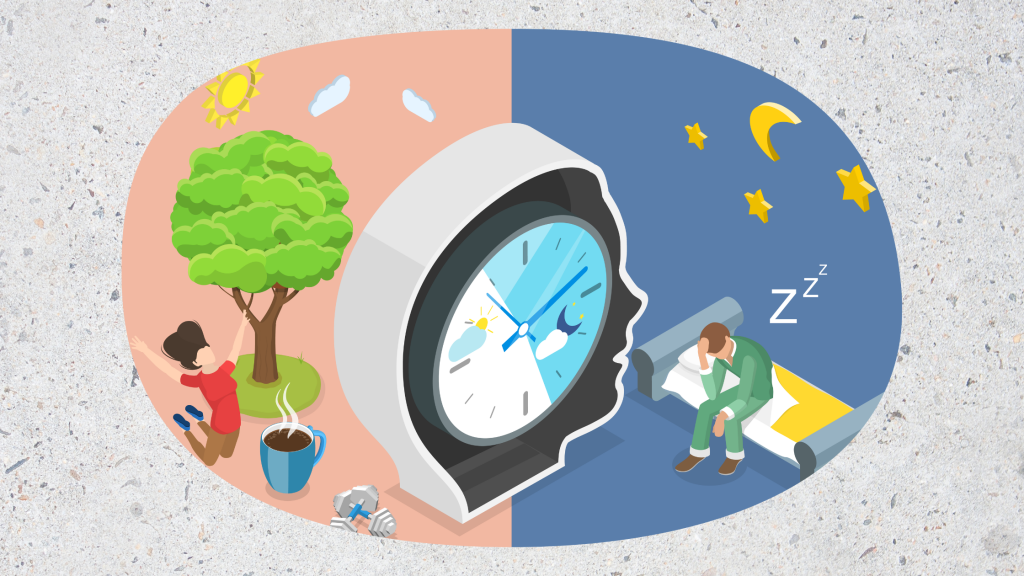
Think of your body as a high-performance orchestra. For the music to sound right, every instrument needs to play at the exact right moment. Circadian rhythms are the conductor of this orchestra. They are the internal 24 hour cycles that regulate physical, mental, and behavioral changes, primarily responding to light and dark.
When these rhythms are in sync, your body functions with peak efficiency. When they are disrupted, it’s like the violins starting a minute before the conductor signals—chaos ensues.

1. The Master Clock and Hormonal Balance
At the center of this system is the suprachiasmatic nucleus (SCN) in the brain. It uses light signals from your eyes to coordinate the release of key hormones:
Melatonin
The “sleep hormone” that rises in the evening to prepare your body for rest.
Cortisol
The “alertness hormone” that peaks in the morning to help you wake up and face the day.
Insulin
Sensitivity fluctuates throughout the day, meaning your body processes sugar differently at 8:00 AM than it does at 11:00 PM.
2. Physical Health and Disease Prevention
Maintaining a steady rhythm is a cornerstone of long-term health. Chronic disruption (often seen in shift workers or through “social jetlag”) is linked to:
Metabolic Health
Increased risk of obesity and Type 2 diabetes.
Cardiovascular Function
Regulation of blood pressure and heart rate.
Immune System
Your body’s ability to fight off infections and repair cellular damage often peaks during specific windows of the sleep cycle.
3. Cognitive Performance and Mood
Your brain is perhaps the most sensitive organ to these cycles. Proper alignment ensures:
Consolidation of Memory
The brain “cleans” itself and stores information during deep sleep.
Emotional Regulation
Stability in your circadian clock is closely tied to mood regulation; disruptions are frequently linked to anxiety and depression.
Reaction Time
Your physical coordination and mental sharpness naturally peak in the mid-to-late afternoon.
4. Digestion and the Gut
The digestive system follows its own strict clock. Enzyme production and gut motility are higher during the day. Eating late at night forces the body to process food when it is biologically prepared for repair and rest, which can lead to poor nutrient absorption and weight gain.
Tips for “Re-Alignment”
If you feel “out of sync,” you can anchor your rhythm using Zeitgebers (time-givers):
Morning Sunlight
Get 10–20 minutes of natural light shortly after waking.
Consistent Mealtimes
Eating at the same time every day trains your metabolic clock.
Temperature Regulation
A slightly cooler environment at night signals to the body that it is time for deep rest.
Digital Sunset: Reducing blue light exposure in the evening prevents the suppression of melatonin.